
Cybersecurity Protects Systems

Cyber Risk Engineering Protects Your Business

Most companies invest in cybersecurity tools — but still don’t understand their true exposure to cyber risk.


 What Cybersecurity Actually Does

 
Cybersecurity Focus What It Means
Firewalls & EDR Block threats
Monitoring Detect suspicious activity
Patching Reduce vulnerabilities
Access controls Limit unauthorized access


These controls are essential — but they don’t answer the most important business question:


“What happens if we still get breached?”


Where Cybersecurity Stops

How much would a breach cost us?
Could we continue operations during an attack?
Are we covered by cyber insurance?
What are our legal and regulatory exposures?
How will leadership respond in the first 24 hours?

These are not technical questions.
They are business risk questions.
BW Lights Out


What is Cyber Risk Engineering?

Cyber Risk Engineering is the discipline of identifying, quantifying, and reducing the financial and operational impact of cyber threats on your business.


Quantifies cyber risk in business terms
Prioritizes controls based on impact
Aligns cybersecurity with insurance and compliance
Prepares organizations to survive incidents — not just prevent them

The Difference Most Companies Miss

Cybersecurity tools are essential — but they don’t address the full scope of cyber risk facing your business. 
Cybersecurity Cyber Risk Engineering
Protects systems and networks Protects the business and its operations
Focused on preventing attacks Focused on managing impact and exposure
Driven by IT teams Driven by executive leadership
Measured by alerts and activity Measured by risk reduction and resilience
Tool-based approach Outcome-based strategy
Reactive to threats Proactive and strategic
Answers: “Are we secure?” Answers: “What happens if we’re breached?”
 
Both approaches matter — but only one addresses the full business impact of a cyber event.

Cyber Risk is Now a Board-Level Issue

Regulators, insurers, and stakeholders now expect organizations to understand and manage cyber risk at the executive level.

Cybersecurity used to be an IT responsibility.

Today, cyber risk is a financial, legal, and operational concern that requires executive oversight.

Boards and leadership teams are now expected to:

  • "Understand their organization’s cyber risk exposure"
  • "Demonstrate risk management practices"
  • "Ensure preparedness for a cyber incident"

This shift is being driven by regulators, insurers, and the increasing real-world impact of cyber events.

gavel

Regulatory Pressure

SEC & Compliance Requirements
Public companies are now required to disclose material cyber incidents and demonstrate governance over cyber risk.

Regulatory expectations around cybersecurity have evolved significantly. Organizations are now expected to demonstrate formal governance, board-level oversight, and the ability to identify and disclose material cyber incidents.

This shift means companies must move beyond technical controls and show that cyber risk is actively managed as part of overall business risk.

insurance (4)

Insurance Pressure

Cyber Insurance Scrutiny
Cyber insurers now require evidence of risk management practices, incident preparedness, and control maturity before issuing or renewing coverage.

Cyber insurance providers are tightening underwriting requirements and increasing scrutiny during both application and renewal.

Organizations must now demonstrate control effectiveness, incident preparedness, and risk management practices—or risk higher premiums, coverage limitations, or denial of claims after an incident.

arrow-down

Financial Impact

Rising Breach Costs
Cyber incidents now result in operational shutdowns, revenue loss, and significant recovery costs.

Cyber incidents increasingly result in operational disruption, revenue loss, and long-term financial consequences.

Beyond immediate recovery costs, organizations face reputational damage, customer churn, regulatory penalties, and extended downtime that can materially impact business performance.

business-meeting

Leadership Accountability

Board & Executive Responsibility
Cyber risk is increasingly viewed as a fiduciary duty for leadership teams and boards.

Cyber risk is now viewed as a leadership responsibility, with boards and executives expected to understand exposure and ensure appropriate oversight.

Failure to do so can lead to personal liability, regulatory scrutiny, and reputational consequences—making cyber risk a core component of fiduciary duty.


Why Bawn Takes a Different Approach

Most organizations invest in cybersecurity tools.
Bawn focuses on reducing the real-world impact of cyber risk.

Founded on Real-World Experience

Bawn was founded by former FBI cyber investigators who have seen firsthand how organizations respond to real-world cyber incidents.

In many cases, companies had invested heavily in cybersecurity tools — yet still suffered significant financial, operational, and reputational damage.

The issue wasn’t a lack of technology.

It was a lack of understanding and managing cyber risk at the business level.

Bawn was built to address that gap.

1
Risk-First Approach

We focus on identifying and reducing business risk — not just deploying security tools.

2
Executive-Level Perspective
We work with leadership teams to align cybersecurity with financial, operational, and strategic priorities.
3
Real-World Incident Insight

Our approach is informed by direct experience with how cyber incidents actually unfold and impact organizations.

4
Structured, Repeatable Framework
We apply a disciplined methodology to assess, prioritize, and manage cyber risk over time.

Cybersecurity tools are necessary.
Understanding and managing cyber risk is what protects your business.

Former FBI Cyber Investigators | Risk-Focused Approach | Executive-Level Advisory

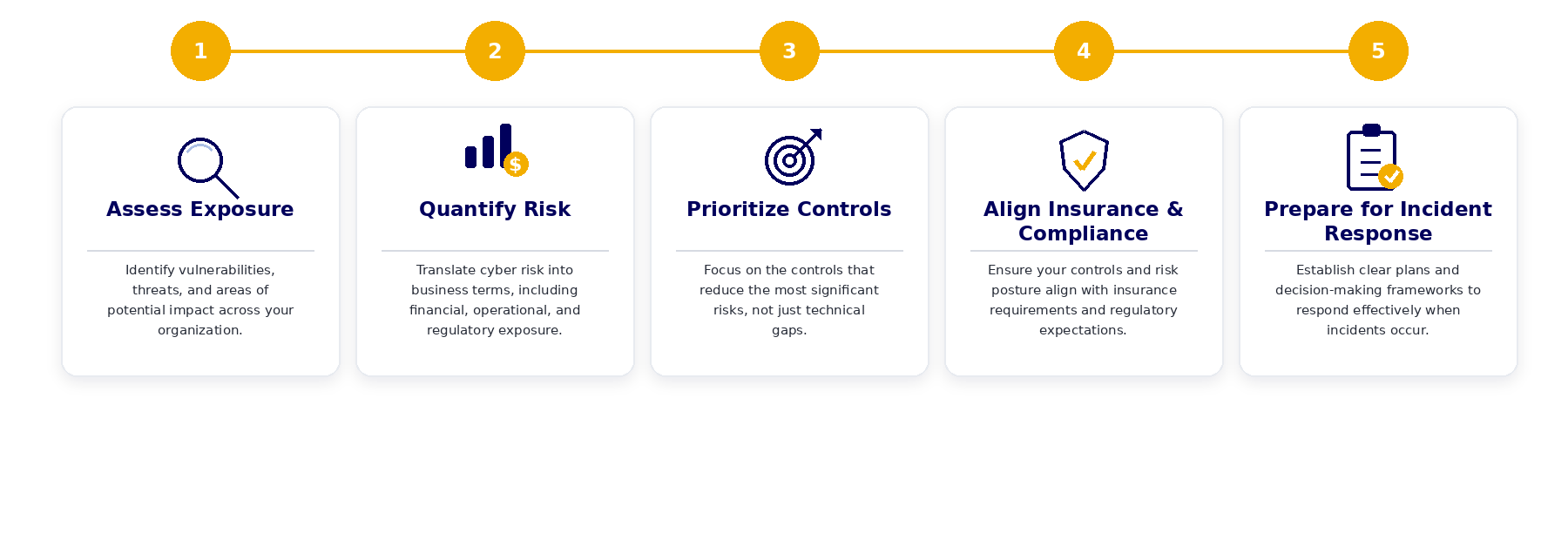
The Bawn Cyber Risk Engineering Framework™

A disciplined, step-by-step approach to understanding, prioritizing, and reducing cyber risk across your organization.

Cyber Risk Engineering requires more than tools—it requires a structured methodology.
bawn_framework_polished_corrected

This framework ensures that cybersecurity investments are aligned with real business risk—helping organizations reduce exposure, improve resilience, and make informed decisions at the executive level.

Understand Your Cyber Risk Exposure

Every organization faces cyber risk, but not every organization understands how exposed it may be.
 
A Cyber Risk Assessment can help identify vulnerabilities, evaluate potential impacts, and prioritize actions that reduce risk.